
A seed planted in doubt
In 2016, a man embarked on the journey to fulfill the wishes of his grandmother Smt. Yashoda who had a property in Mumbai and Malvan. He returned to Maharashtra from USA after many years, carrying a quiet uncertainity about the food served on his table. He had read about A2 milk, about the Bilona method, about the ancient bond between Indian farmers and the Indian breed of Cows. He decided to find out for himself.
He began with one cow named KASHI and her calf Yashoda named after his grandmother at his chembur residence in 2016. No farm, no plan no job for survival— just a cow, a small plot of backyard land, and the determination to learn. The first batch of milk flowed and everyone was rejoiced. The ghee took some more days. It was perfect, golden, and unlike anything he had tasted before.
"The first spoonful of our own ghee told me everything I needed to know."
GirYashoda, founder
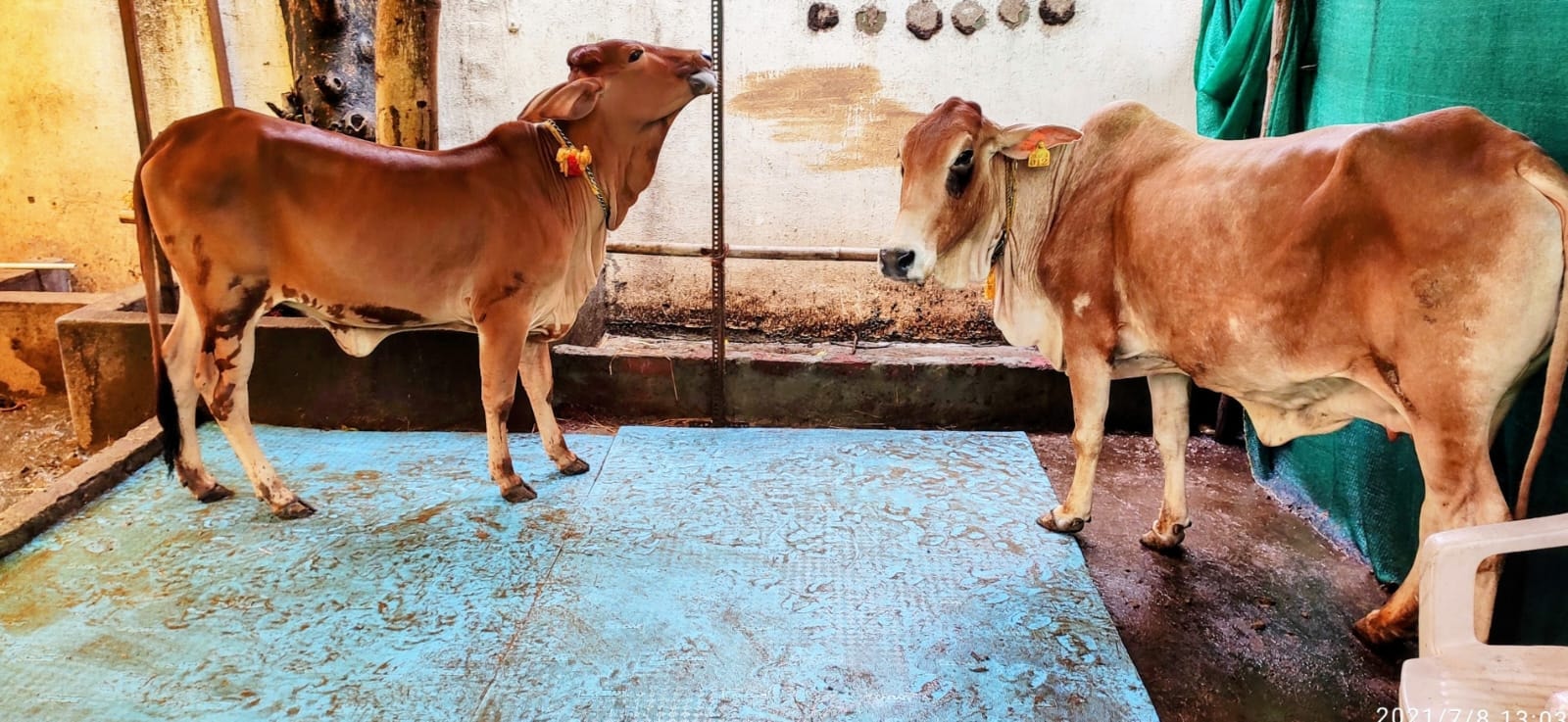
Early days on the farm — the first Gir cow, named Kaveri.
Learning from the land
The Gir cow is not a high-yield animal. She gives less milk than a Holstein, moves at her own pace, and demands patience and love. But what she gives is extraordinary — milk rich in A2 beta-casein, with a creaminess that comes from open pasture and natural fodder, not supplements.
We learned the Bilona method from an elder in a nearby village — hand-churning curd set from raw milk, slow-cooking the butter until it turns golden and fragrant. It takes four times longer than industrial ghee. Also it took 25 to 28 litres of milk to prepare 1 kg ghee. The milk was boiled in an earthen pot. Then the milk was transferred to another earthen pot and a adequate amount of sweet mother curd (starter) Jaman was added to this lukewarm milk. the mouth of the pot was properly sealed. It was opened the next day. Once the curd is fully set we remove the same in a specially made wooden churner (mathani). Continue churning until the mixture spilts while soft lumps of butter floats on the top. the same is collected by hand. We then washed the butter and squeezing out the excess water and then boiling the butter at low medium flame on wooden stove. The finished product was a golden liquid with granules consistency and the riches of aroma ever experienced. We have never found a better reason to change it.
